
Nexa Blog
You Got the Reply — So Why No Call? Fix This LinkedIn Conversion Gap
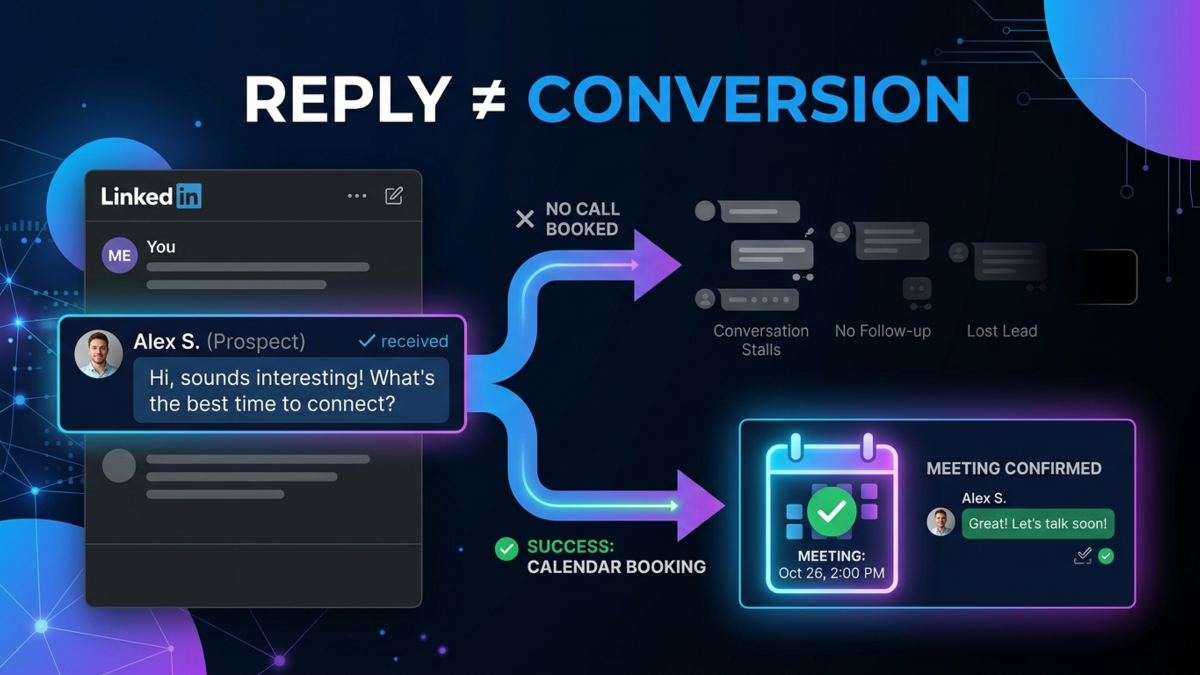
Getting replies is not success — it’s just step one
A lot of people celebrate too early.
They get a reply and think:
“Nice, it’s working.”
But then…
- No call gets booked
- Conversation fades
- Lead disappears
That’s the real problem.
“even with follow-ups, this is where conversions drop”
Replies don’t pay.
Calls do.
Why replies don’t turn into calls
Let’s break the real causes.
1) You switch from conversation → pitch too fast
This is the biggest mistake.
You go from:
“Curious how you’re handling outbound?”
To:
“Let’s jump on a call.”
Too fast.
No bridge.
The conversation needs to build, not jump.
2) There’s no clear next step
Many conversations just… drift.
No direction.
No structure.
No momentum.
If you don’t guide the conversation, it dies.
3) You didn’t confirm the problem
You assumed.
But didn’t validate.
If the prospect doesn’t clearly feel the pain, they won’t commit to a call.
“this starts with proper qualification”
No pain = no urgency.
4) Your ask feels heavy
“Let’s book a 30-min call.”
That’s a big ask for a cold conversation.
Especially early.
“this is where friction kills conversions”
Lower friction = higher conversion.
The simple fix: conversation → clarity → call
Here’s the structure that works.
Step 1: Expand the conversation
Don’t rush.
Ask:
- “How are you currently handling it?”
- “What’s been the biggest challenge?”
Get context.
Step 2: Confirm pain
You want them to say it.
Example:
“Got it — so consistency in outbound is the main issue right now?”
Now it’s real.
Step 3: Position the call naturally
Instead of:
“Let’s hop on a call”
Say:
“Happy to share what’s working for others in your position — want me to walk you through it?”
This feels:
- Helpful
- Relevant
- Low pressure
“this style of messaging improves response quality”
Step 4: Make it easy
Don’t overcomplicate.
- Suggest a quick chat
- Keep it short
- Give 1–2 options
Remove friction.
Real example: reply → no call vs reply → booked call
Weak flow:
Prospect: “Yeah, we’re trying to improve lead gen.”
You: “Let’s book a call.”
→ Dead
Strong flow:
Prospect: “Yeah, we’re trying to improve lead gen.”
You: “Got it — what’s been harder so far: getting replies or finding the right prospects?”
Prospect answers.
You:
“Makes sense. I’ve seen this a lot — happy to share what’s working if you want.”
→ Call booked
Why this connects to everything before
If earlier steps are weak, this breaks.
- Bad leads → no real conversations
- No intent → low urgency
- Generic messaging → weak replies
“this improves conversation quality from the start”
Conversion starts before the call.
Where Nexa fits in
This stage depends on:
- Lead quality
- Signal accuracy
- Conversation relevance
If those are weak, no amount of “closing” helps.
Nexa helps you:
- Start with better leads
- Use real signals
- Enter conversations with context
“see how better data impacts conversions”
Because better inputs = easier conversions.
The mindset shift
Stop thinking:
“I got replies, so it’s working.”
Start thinking:
“Did those replies turn into calls?”
That’s the real metric.
What to do next
- Review your last 10 conversations
- See where they dropped
- Check if you rushed the call
- Add 1–2 qualifying questions
- Reframe your ask
“if you want to improve your system further”
Fix this step, and your pipeline becomes real.
Related articles
LinkedIn Cold Message Templates That Actually Get Replies (With Real Examples)
Struggling with LinkedIn outreach? These proven cold message templates help you start conversations and get replies without sounding spammy.
Read more →
Why You’re Getting Ignored on LinkedIn (And How to Fix Your Outreach Fast)
If your LinkedIn messages are getting ignored, it’s not bad luck. Here’s exactly why it’s happening and how to fix your outreach to start getting replies.
Read more →
How to Get Your First 10 B2B Leads from LinkedIn (No Audience, No Budget)
A step-by-step system to get your first 10 qualified B2B leads from LinkedIn even if you have zero audience, no ads, and no expensive tools.
Read more →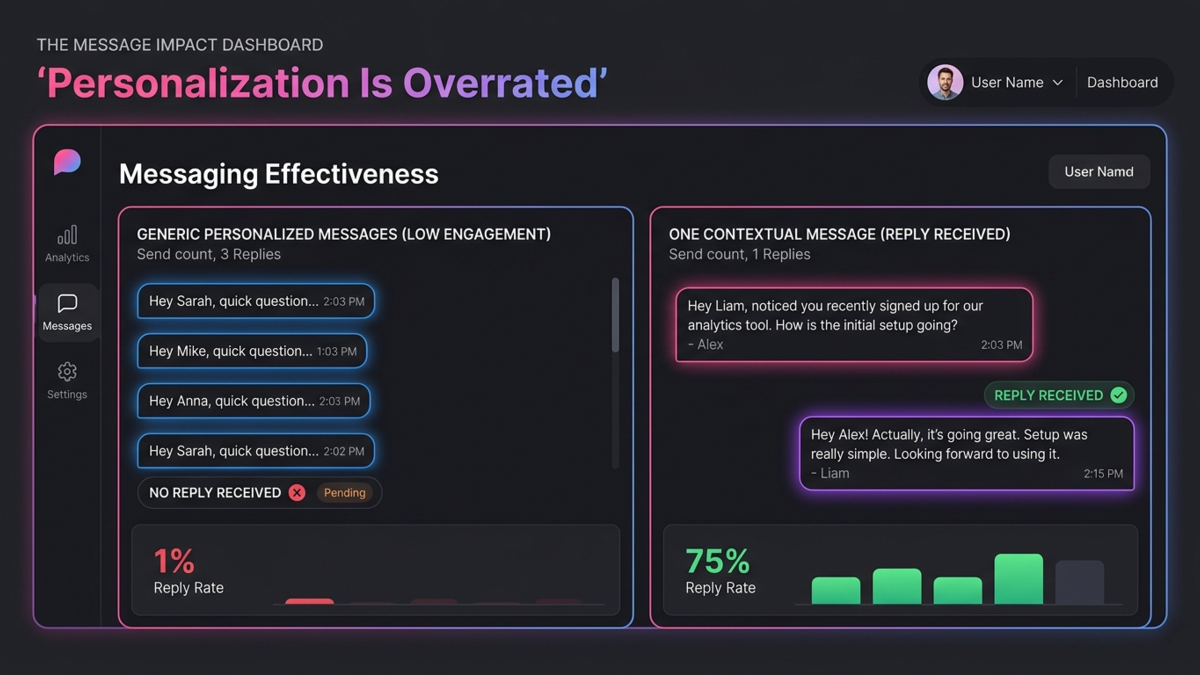
Personalization Is Overrated (Here’s What Actually Gets Replies)
Adding someone’s name and company won’t get you replies. Most personalization is fake—and prospects can tell instantly.
Read more →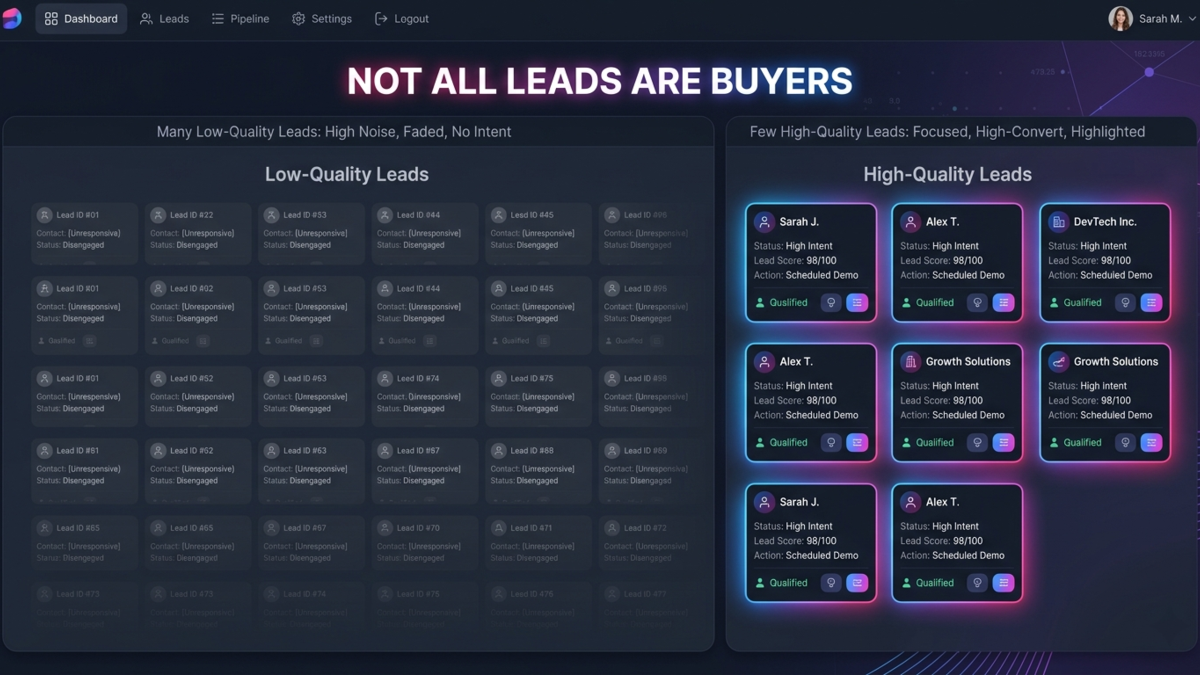
You Don’t Have a Lead Problem, You Have a Fake Lead Problem
If your leads aren’t converting, the problem isn’t closing. It’s that most of them were never real buyers in the first place.
Read more →