
Nexa Blog
How to Find High-Intent Leads on LinkedIn (The Signals Everyone Else Misses)
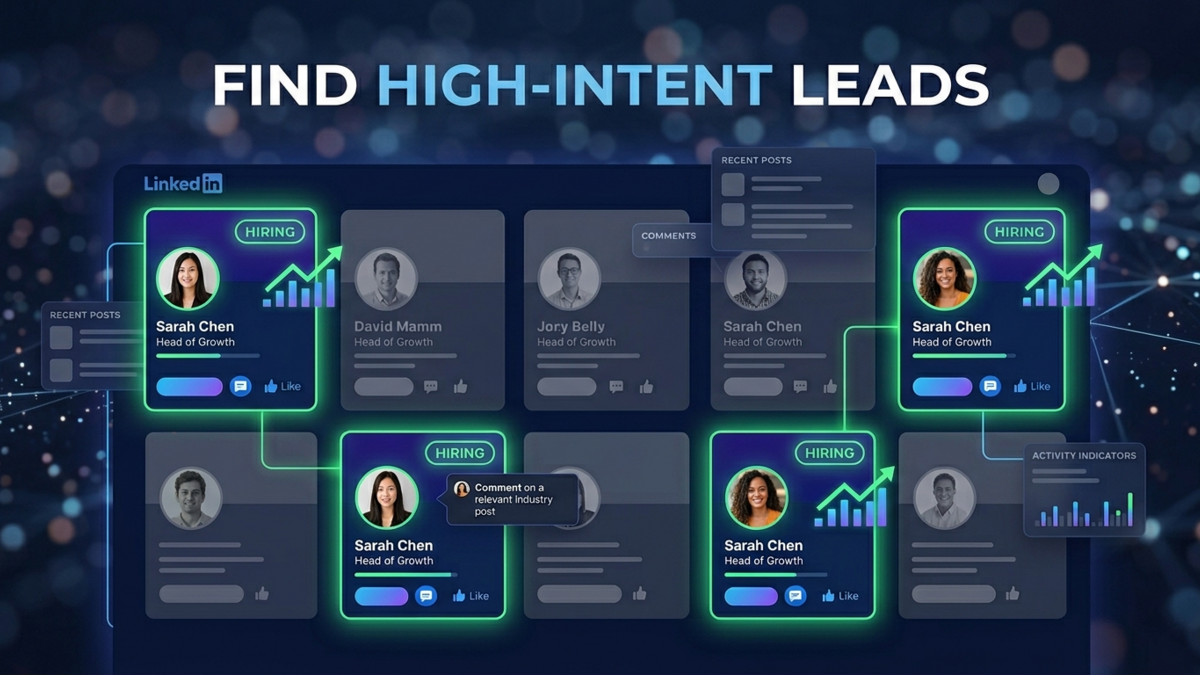
Stop searching. Start spotting intent.
Most LinkedIn lead generation looks like this:
- Open Sales Navigator
- Apply random filters
- Export a list
- Start messaging
No intent. No context. No reason for the prospect to care.
That’s why it fails.
“before you even think about messaging, you need qualified leads”
Because even if someone “fits,” it does not mean they are ready.
Intent is what separates possible buyers from active buyers.
What is a high-intent lead?
A high-intent lead is someone who is:
- Actively trying to solve a problem
- Already thinking about growth or acquisition
- Likely to take action soon
Not just someone who could buy.
Someone who is already moving.
“if you're relying on basic LinkedIn lead generation”
That approach finds people.
This approach finds buyers.
The 6 LinkedIn signals that actually matter
Forget generic filters.
These are the signals that show real intent.
1) Hiring for sales or growth
If a company is hiring:
- SDRs
- BDRs
- Growth marketers
They have a pipeline problem.
And they are actively trying to fix it.
This is one of the strongest buying signals.
2) Posting about lead generation or growth
When someone posts:
- “Struggling with outbound”
- “Need more leads”
- “Scaling pipeline”
They are literally telling you the problem.
Most people ignore this.
Smart people build lists from it.
“most people ignore obvious signals like this”
3) Recent launches or offers
New product = need for customers.
Look for:
- “We just launched…”
- “Excited to announce…”
- “New feature is live…”
This is a window where they are most open to help.
4) Job changes (new role)
Someone who just became:
- Head of Growth
- Founder
- Sales Lead
Needs quick wins.
They are under pressure.
That makes them high-intent.
5) Funding announcements
Funding = expectation to grow.
Growth = need for leads.
These companies move fast and spend faster.
6) High engagement activity
If someone:
- Posts regularly
- Gets comments
- Engages with others
They are reachable.
And more likely to reply.
“when you pair this with the right messaging”
Where most people go wrong
They build lists like this:
- “SaaS founders”
- “Marketing managers”
- “Agencies”
That is not targeting.
That is guessing.
“instead of just applying filters”
Filters give you categories.
Signals give you opportunities.
A better way to build your lead list
Instead of scraping 1,000 random profiles:
Do this:
- Look for one signal (e.g. hiring posts)
- Collect only those profiles
- Apply qualification (Day 12 framework)
- Prioritize top leads
- Then message
“turn this into a repeatable system”
This is slower at first.
But massively better long term.
Real example of a high-intent lead
Let’s break it down:
- Founder posts: “Hiring 2 SDRs”
- Recently launched a new product
- Active on LinkedIn
- Engages with comments
This is not a cold lead.
This is a warm opportunity.
Compare that to:
- Random founder
- No activity
- No signals
- No urgency
Same title.
Completely different outcome.
Why this changes your reply rate
When you message high-intent leads:
- They already feel the problem
- They are already thinking about solutions
- Your message feels relevant
So instead of:
“Hey, I help with lead gen…”
You are saying:
“Noticed you’re hiring SDRs — curious how you’re handling outbound right now?”
That is a different conversation.
Where Nexa fits in
Manually finding these signals is painful:
- Scrolling posts
- Checking profiles
- Tracking activity
It does not scale.
Nexa helps you:
- Identify high-intent leads faster
- Surface real signals
- Focus only on buyers
“compare how different tools handle lead quality”
Because the goal is not more leads.
The goal is better leads.
The shift you need to make
Stop thinking:
“I need more leads.”
Start thinking:
“I need better signals.”
That one shift changes everything.
What to do next
- Pick 1–2 intent signals
- Build lists around them
- Apply qualification (Day 12)
- Send targeted messages
- Track replies
“if you're exploring better tools for this”
This is how you move from random outreach → high-converting pipeline.
Related articles
How to Get Your First 10 B2B Leads from LinkedIn (No Audience, No Budget)
A step-by-step system to get your first 10 qualified B2B leads from LinkedIn even if you have zero audience, no ads, and no expensive tools.
Read more →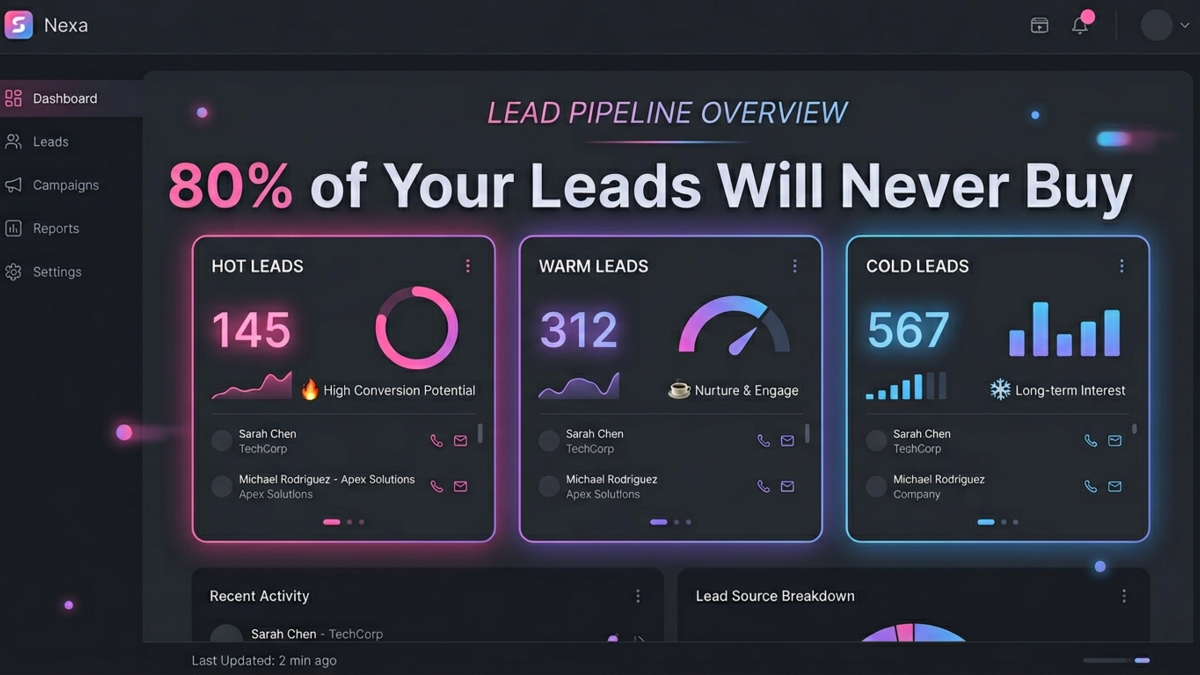
You’re Generating Leads Daily — But Here’s Why 80% Of Them Will Never Buy
Getting leads isn’t the problem anymore. The real issue? Most of them were never going to convert in the first place.
Read more →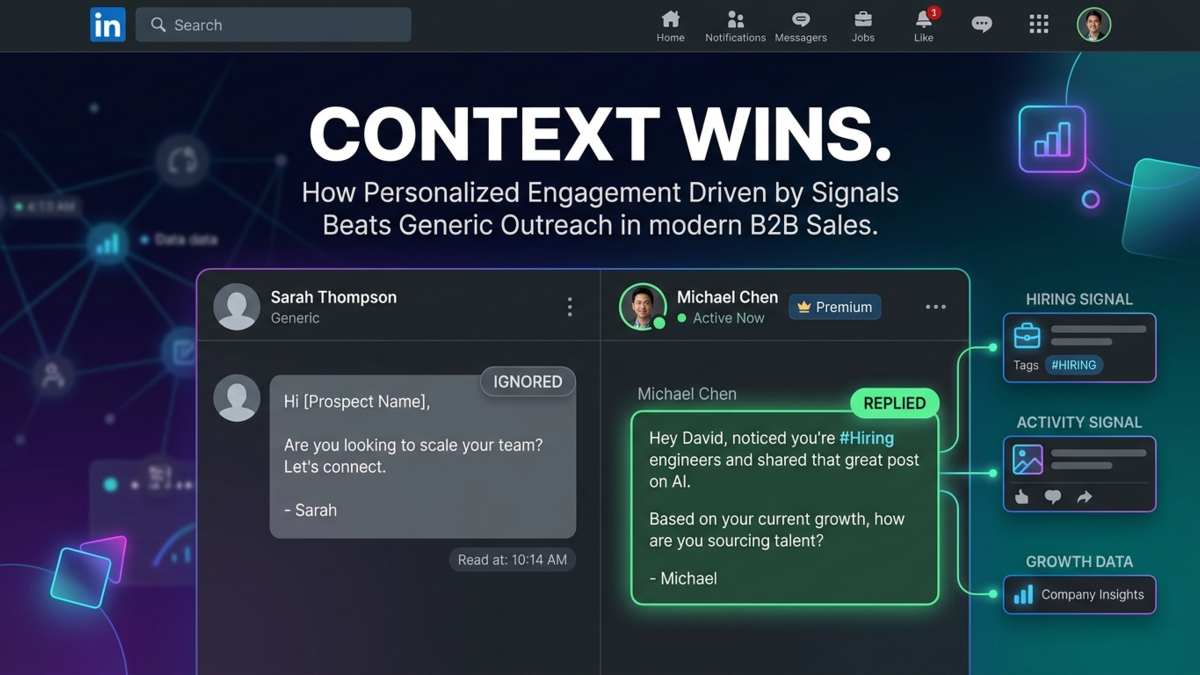
Why Your LinkedIn Messages Get Ignored (And How to Personalize Them Using Real Signals)
Generic LinkedIn messages fail because they ignore context. This guide shows you how to use real signals like hiring, posts, and activity to write personalized messages that actually get replies.
Read more →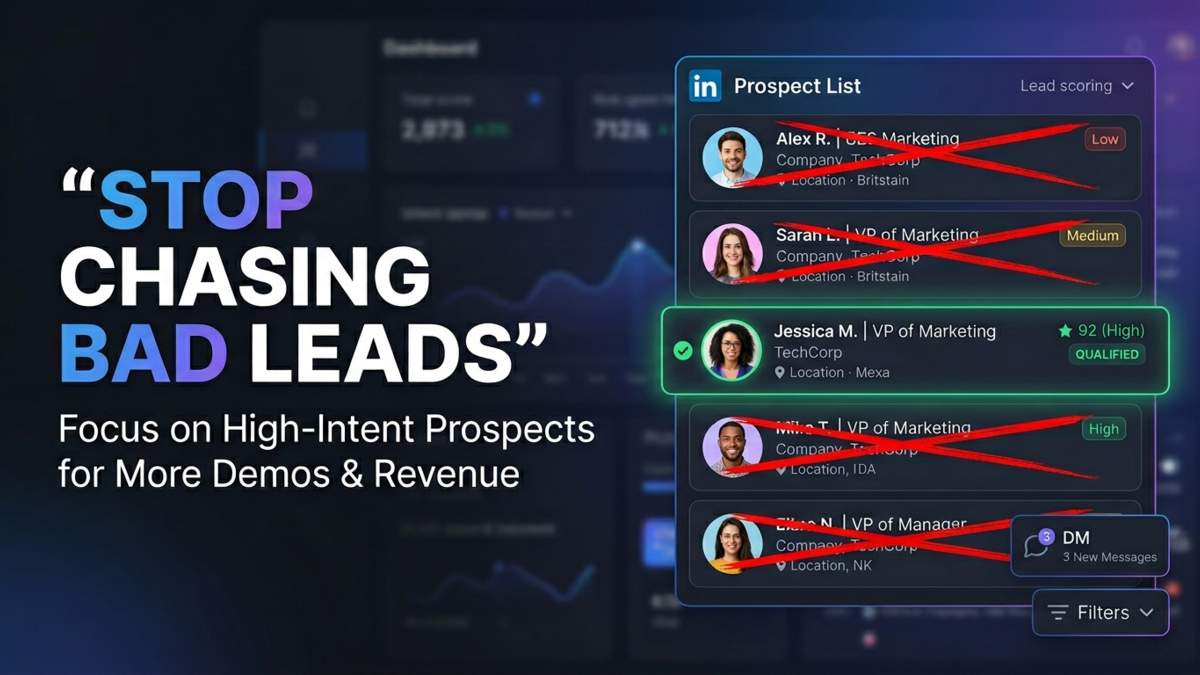
Stop Chasing Bad Leads: How to Qualify LinkedIn Prospects Before You Send a Single DM
Most LinkedIn lead gen fails for one reason: people message the wrong prospects too early. This guide shows you how to filter out bad leads, score intent, and focus only on prospects worth your time.
Read more →