
Nexa Blog
You’re Losing 70% of Replies by Not Following Up — Here’s How to Fix It on LinkedIn
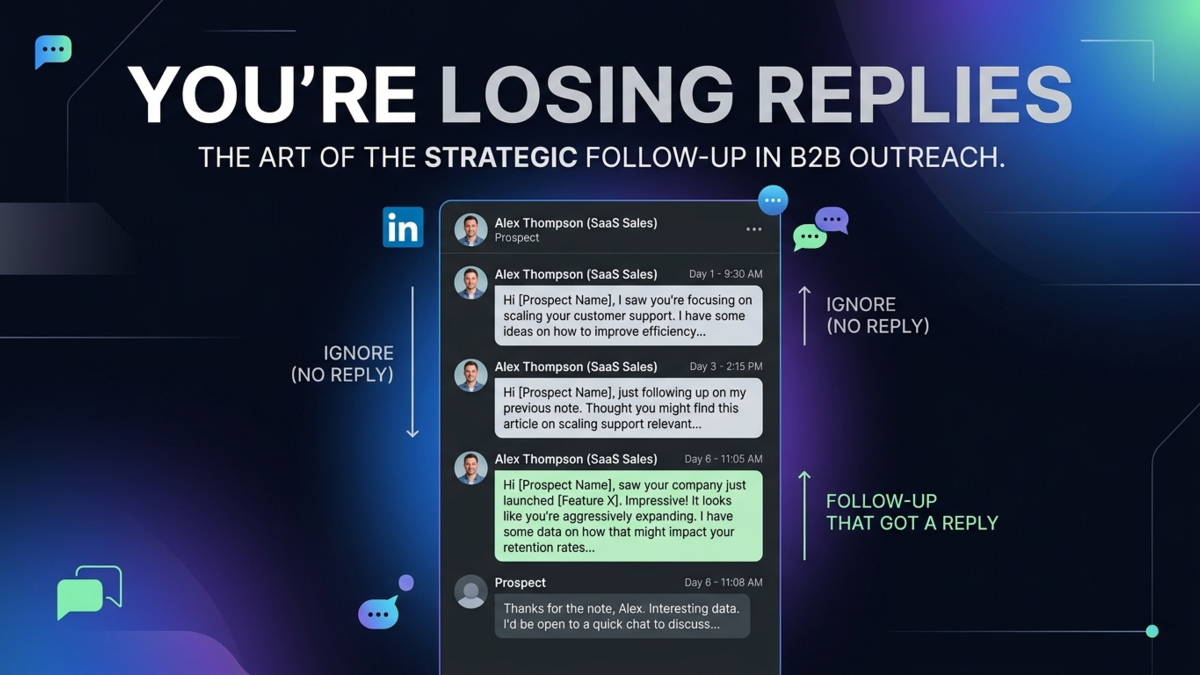
The biggest mistake in LinkedIn outreach isn’t the first message
It’s what happens after it.
Most people:
- Send 1 message
- Get no reply
- Move on
That’s where they lose deals.
Because in reality:
Most replies happen after the first message.
“this is where most outreach starts leaking”
If you don’t follow up, you’re leaving pipeline on the table.
Most replies don’t come from the first message — they come from the follow-up. Use Nexa to stay consistent, track leads, and turn ignored messages into real conversations.
Why prospects don’t reply (it’s not always rejection)
Before fixing follow-ups, understand this:
People don’t reply because:
- They were busy
- They saw it and forgot
- Timing was off
- They weren’t ready yet
Not because they hated your message.
“timing and intent matter more than people think”
Your job is not to push harder.
It’s to re-enter at the right moment.
Why most follow-ups fail
Let’s be honest.
Most follow-ups look like this:
- “Just following up…”
- “Bumping this…”
- “Any thoughts?”
These don’t work.
Why?
Because they add zero value.
A follow-up should not repeat.
It should advance the conversation.
Most replies don’t come from the first message — they come from the follow-up. Use Nexa to stay consistent, track leads, and turn ignored messages into real conversations.
The 4 follow-up frameworks that actually get replies
1) The context follow-up
Bring back relevance.
Example:
“Noticed you’re still hiring SDRs — curious if outbound is something you're actively optimizing right now?”
Why it works:
- Reconnects with a signal
- Feels natural
- Not pushy
2) The value follow-up
Add something useful.
Example:
“Quick thought — most teams hiring SDRs struggle with consistency early on. Are you seeing that too?”
Now you’re contributing.
Not chasing.
3) The assumption follow-up
Lower resistance.
Example:
“Guessing this might not be a priority right now — or are you still exploring ways to improve lead flow?”
This works because:
- It removes pressure
- Makes replying easy
“this style of messaging increases replies”
4) The pattern interrupt
Break the script.
Example:
“Random question — what’s been harder lately: getting replies or finding the right prospects?”
This feels different.
Different gets attention.
Most replies don’t come from the first message — they come from the follow-up. Use Nexa to stay consistent, track leads, and turn ignored messages into real conversations.
The ideal follow-up timing (don’t guess this)
Here’s a simple structure:
- Day 1 → Initial message
- Day 3 → Follow-up 1
- Day 6 → Follow-up 2
- Day 10 → Final follow-up
That’s it.
Not 10 follow-ups.
Not 1 message.
“this is part of a structured system”
Consistency beats randomness.
Real example: no follow-up vs smart follow-up
Without follow-up:
- Message sent
- No reply
- Lead lost
With follow-up:
- Message sent
- No reply
- Follow-up with context
- Prospect replies
Same lead.
Different outcome.
Most replies don’t come from the first message — they come from the follow-up. Use Nexa to stay consistent, track leads, and turn ignored messages into real conversations.
Why this connects to everything before
Let’s be clear:
Follow-ups only work if:
- Lead is qualified (Day 12)
- There is intent (Day 13)
- Message has context (Day 14)
“this breaks if your leads are weak”
Follow-ups don’t fix bad outreach.
They amplify good outreach.
Where Nexa fits in
Follow-ups break when your system breaks:
- You forget who to follow up with
- You lose track of conversations
- You follow up randomly
Nexa helps you:
- Track high-quality leads
- Stay consistent with outreach
- Focus on conversations that matter
“see how tools support outreach workflows”
Because consistency is where most people fail.
Most replies don’t come from the first message — they come from the follow-up. Use Nexa to stay consistent, track leads, and turn ignored messages into real conversations.
The mindset shift
Stop thinking:
“I already messaged them.”
Start thinking:
“They haven’t seen the right message at the right time yet.”
That changes how you follow up.
What to do next
- Go back to your last 20 ignored messages
- Send a contextual follow-up
- Keep it short
- Add relevance
- Ask a simple question
“if you want to scale this process”
You’ll be surprised how many replies come back.
Related articles
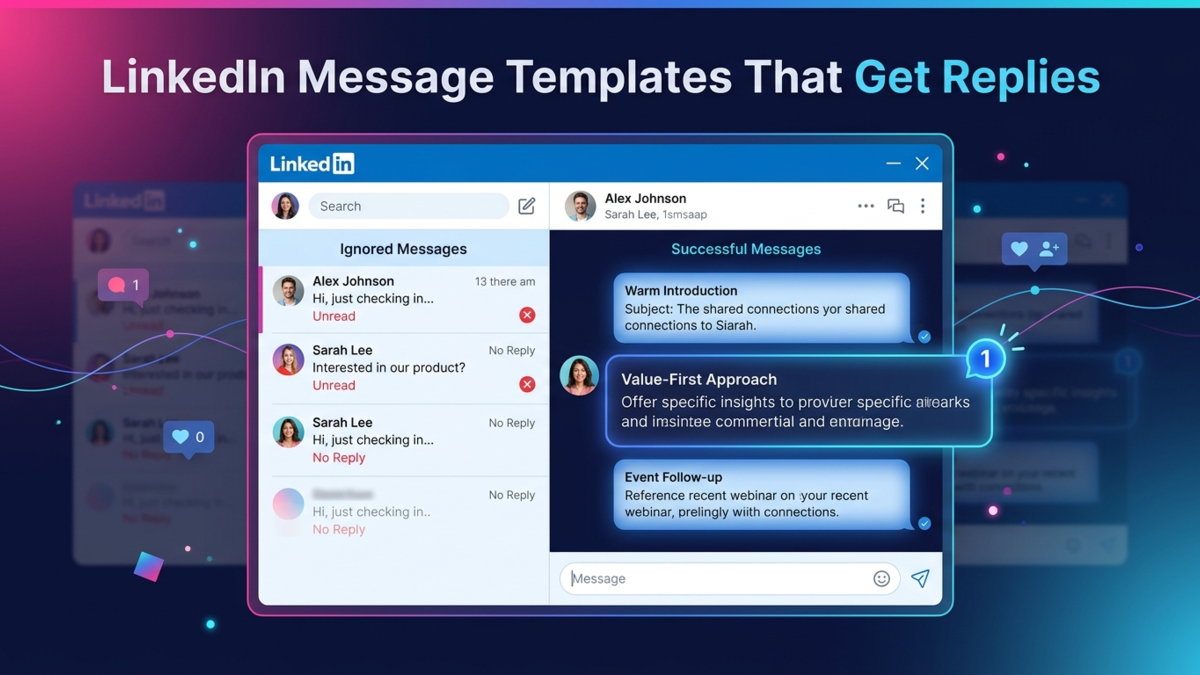
LinkedIn Cold Message Templates That Actually Get Replies (With Real Examples)
Struggling with LinkedIn outreach? These proven cold message templates help you start conversations and get replies without sounding spammy.
Read more →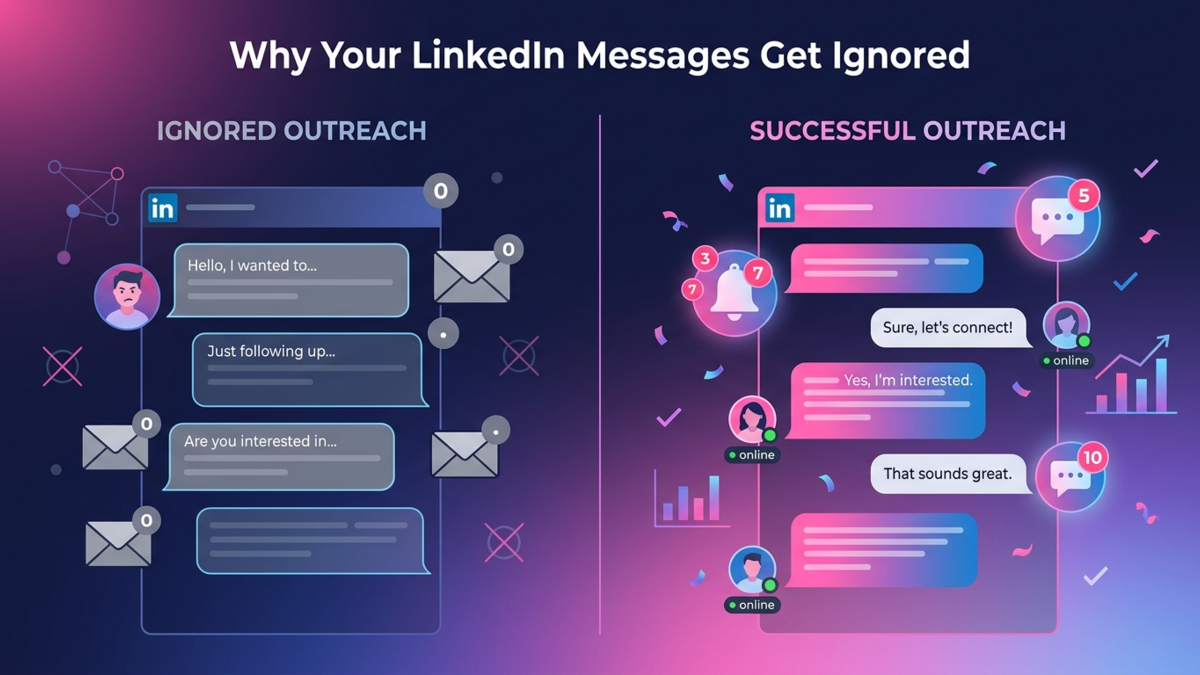
Why You’re Getting Ignored on LinkedIn (And How to Fix Your Outreach Fast)
If your LinkedIn messages are getting ignored, it’s not bad luck. Here’s exactly why it’s happening and how to fix your outreach to start getting replies.
Read more →
How to Get Your First 10 B2B Leads from LinkedIn (No Audience, No Budget)
A step-by-step system to get your first 10 qualified B2B leads from LinkedIn even if you have zero audience, no ads, and no expensive tools.
Read more →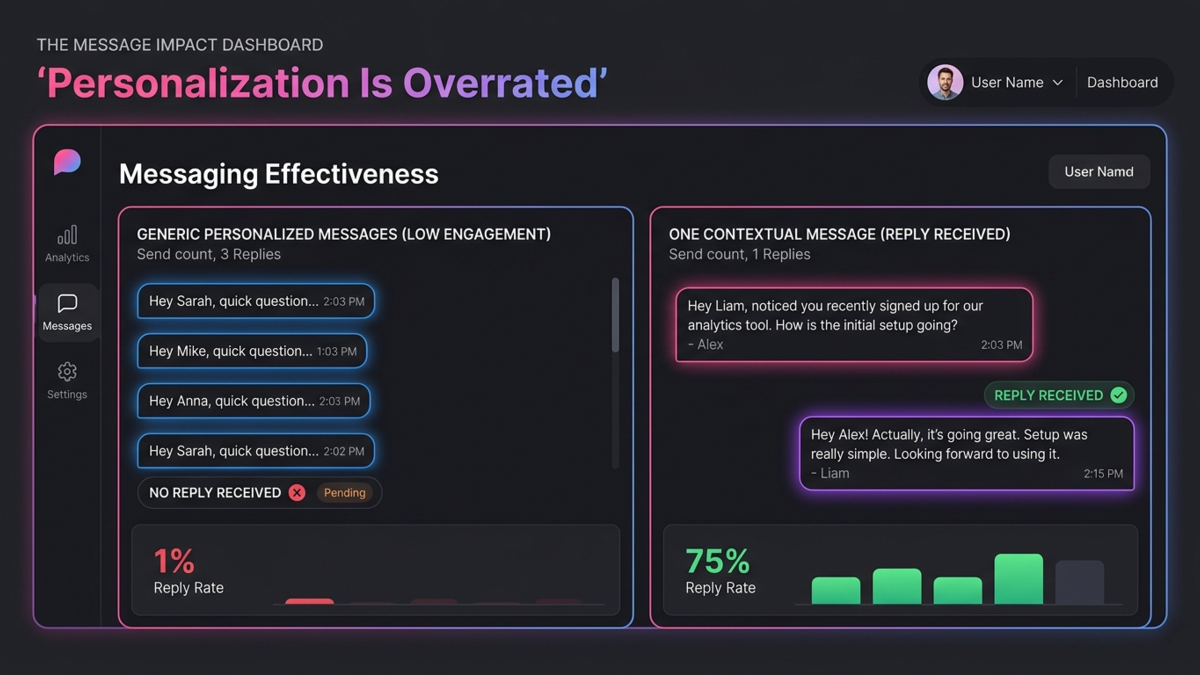
Personalization Is Overrated (Here’s What Actually Gets Replies)
Adding someone’s name and company won’t get you replies. Most personalization is fake—and prospects can tell instantly.
Read more →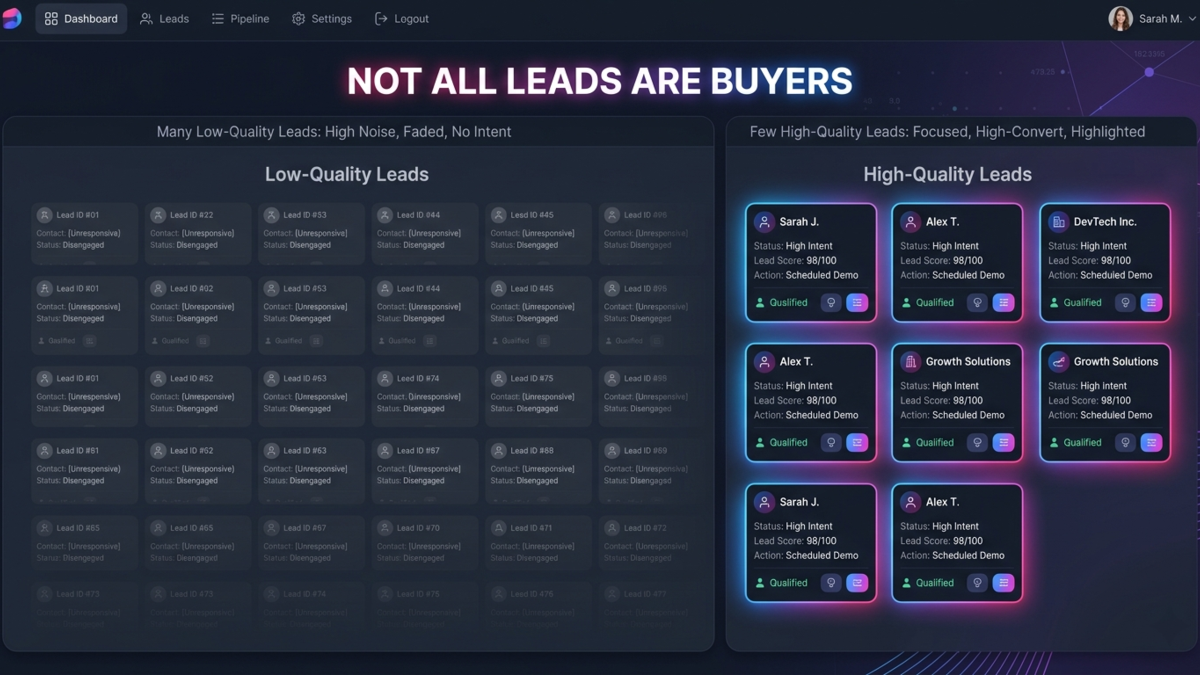
You Don’t Have a Lead Problem, You Have a Fake Lead Problem
If your leads aren’t converting, the problem isn’t closing. It’s that most of them were never real buyers in the first place.
Read more →