
Nexa Blog
Best LinkedIn Lead Generation Strategies for SaaS Founders
Introduction
LinkedIn is one of the most effective platforms for B2B lead generation, especially for SaaS founders.
But simply sending connection requests or messages isn’t enough. To get consistent results, you need a clear strategy.
In this guide, we’ll break down proven LinkedIn lead generation strategies that SaaS founders use to consistently find and convert high-quality prospects.
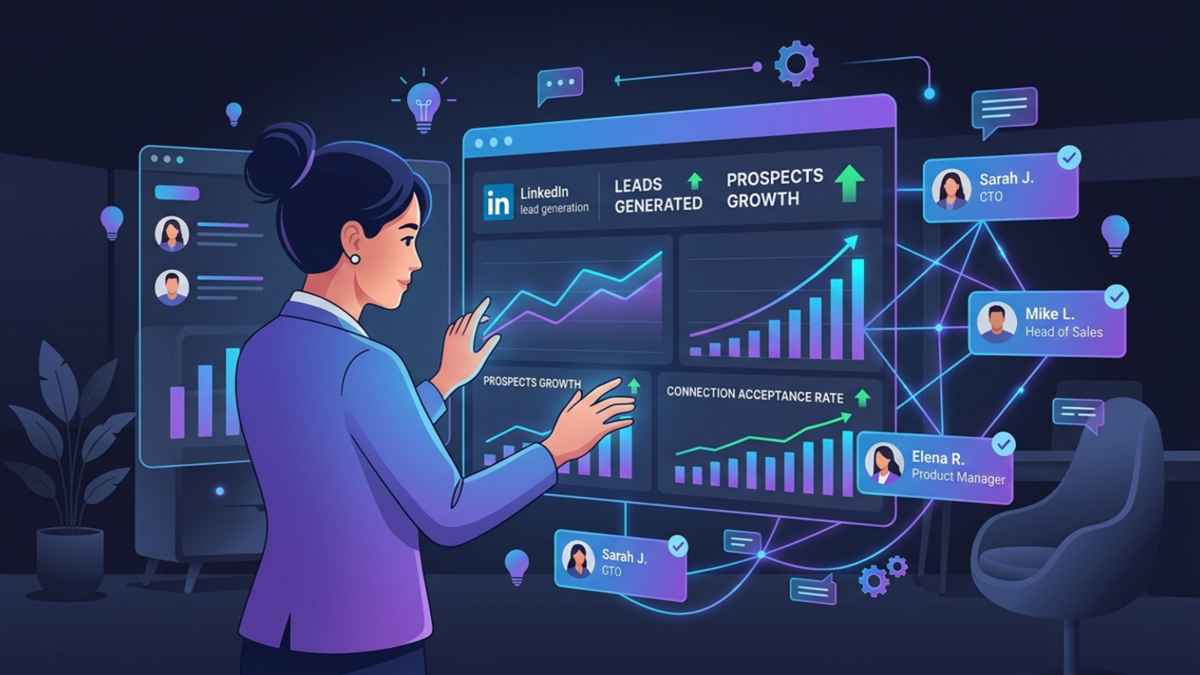
Before applying these strategies, it's important to understand how a complete LinkedIn lead generation system works from start to finish.
Why Strategy Matters More Than Tools
Many founders believe they need expensive tools to succeed on LinkedIn.
The reality is that strategy matters more than tools.
Without a clear approach:
- You target the wrong audience
- Your outreach feels random
- Your response rates stay low
With the right strategy, even simple methods can generate strong results.
1. Define Your Ideal Customer Profile (ICP)
Before you start prospecting, you need clarity on who you’re targeting.
Your ideal customer profile should include:
- Job title (e.g., Founder, Head of Sales)
- Industry (SaaS, agencies, startups)
- Company size
- Pain points
For example:
If you're building a lead generation SaaS, your ICP could be:
SaaS founders struggling to find qualified leads consistently.
Clear targeting improves both lead quality and conversion rates.
2. Use Content to Attract Inbound Leads
Outbound is powerful, but combining it with content makes it even stronger.
Posting valuable content on LinkedIn helps you:
- Build authority
- Attract inbound leads
- Warm up your audience
You don’t need to post daily. Even a few valuable posts per week can make a difference.
3. Personalize Your Outreach
Generic messages don’t work anymore.
If your message looks copied and pasted, prospects will ignore it.
Instead:
- Mention something specific about the person
- Refer to their work or content
- Keep the message short and relevant
Personalization increases your chances of getting replies.
4. Focus on Conversations, Not Sales
Many people treat LinkedIn like a direct sales channel.
This is a mistake.
Your goal should be to start conversations, not close deals immediately.
A simple approach:
- Ask a question
- Show genuine interest
- Avoid aggressive selling
This builds trust and leads to better outcomes.
Many founders struggle with outreach because they make small but critical errors. Avoiding common LinkedIn prospecting mistakes can significantly improve your response rates.
5. Build a Consistent Prospecting System
Random outreach leads to inconsistent results.
Instead, create a simple daily system:
- Find 10–20 new prospects
- Send connection requests
- Follow up with existing leads
Consistency is what drives long-term results.
6. Combine Manual Effort with Automation
Manual prospecting works when you're starting out.
But as you grow, it becomes difficult to scale.
This is where automation tools help by:
- Finding relevant prospects faster
- Filtering qualified leads
- Reducing manual effort
This allows you to focus more on conversations and closing deals.
7. Track and Improve Your Results
To improve your LinkedIn strategy, track basic metrics:
- Connection acceptance rate
- Reply rate
- Conversion rate
If something isn’t working, adjust your approach.
Small improvements can lead to significant gains over time.
Conclusion
LinkedIn lead generation isn’t about sending hundreds of random messages.
It’s about:
- Targeting the right people
- Starting meaningful conversations
- Staying consistent over time
By applying the strategies in this guide, SaaS founders can build a more reliable and scalable lead generation system.
Related articles
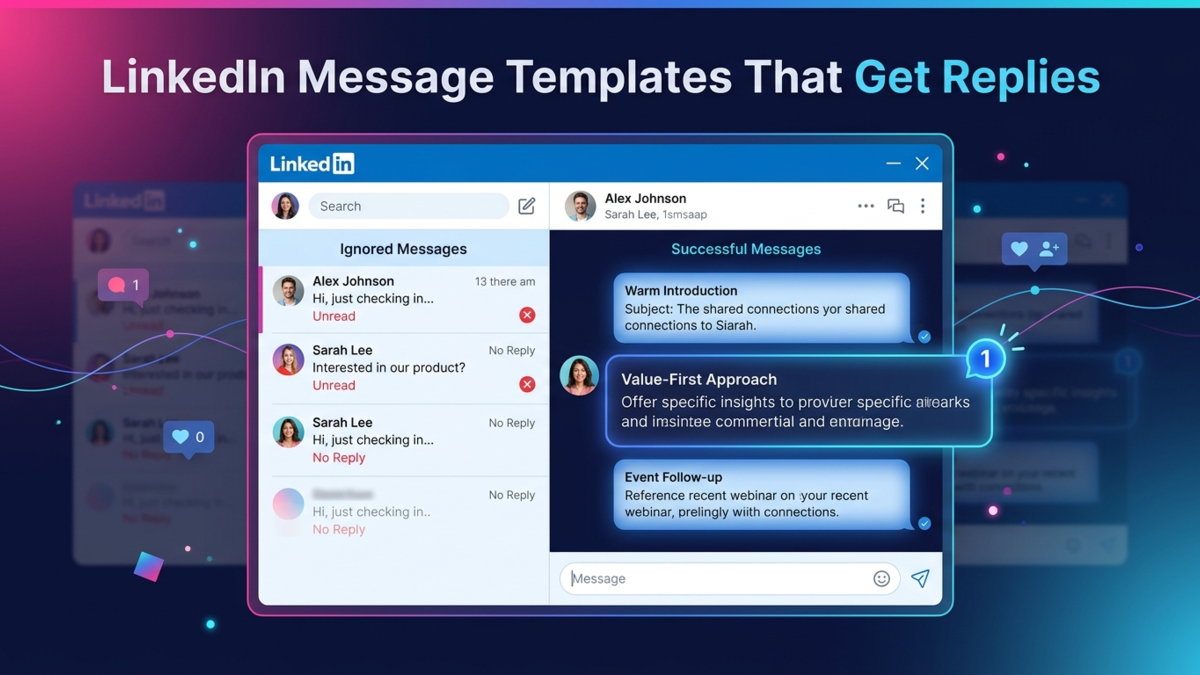
LinkedIn Cold Message Templates That Actually Get Replies (With Real Examples)
Struggling with LinkedIn outreach? These proven cold message templates help you start conversations and get replies without sounding spammy.
Read more →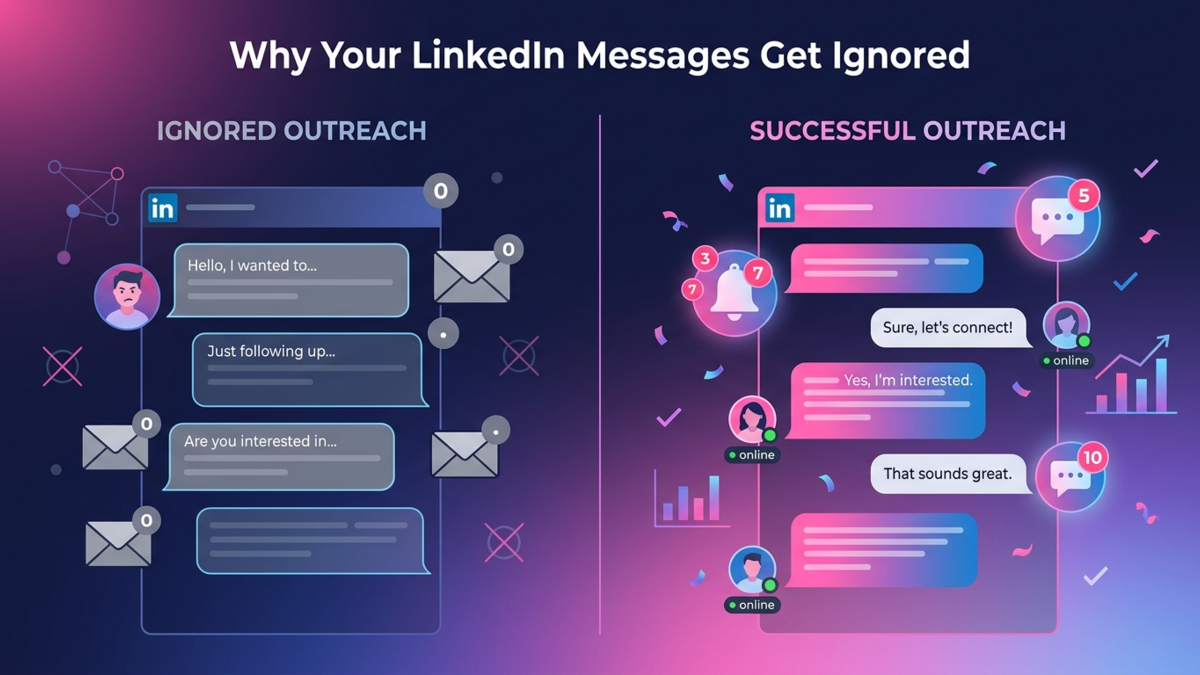
Why You’re Getting Ignored on LinkedIn (And How to Fix Your Outreach Fast)
If your LinkedIn messages are getting ignored, it’s not bad luck. Here’s exactly why it’s happening and how to fix your outreach to start getting replies.
Read more →
How to Get Your First 10 B2B Leads from LinkedIn (No Audience, No Budget)
A step-by-step system to get your first 10 qualified B2B leads from LinkedIn even if you have zero audience, no ads, and no expensive tools.
Read more →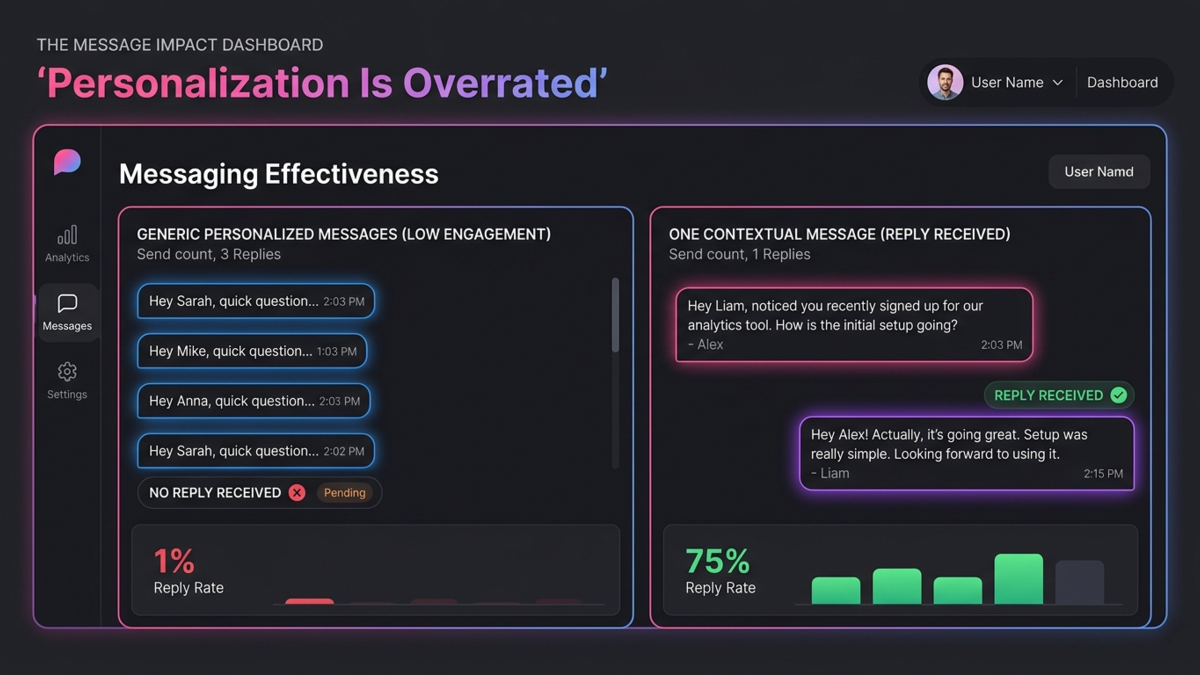
Personalization Is Overrated (Here’s What Actually Gets Replies)
Adding someone’s name and company won’t get you replies. Most personalization is fake—and prospects can tell instantly.
Read more →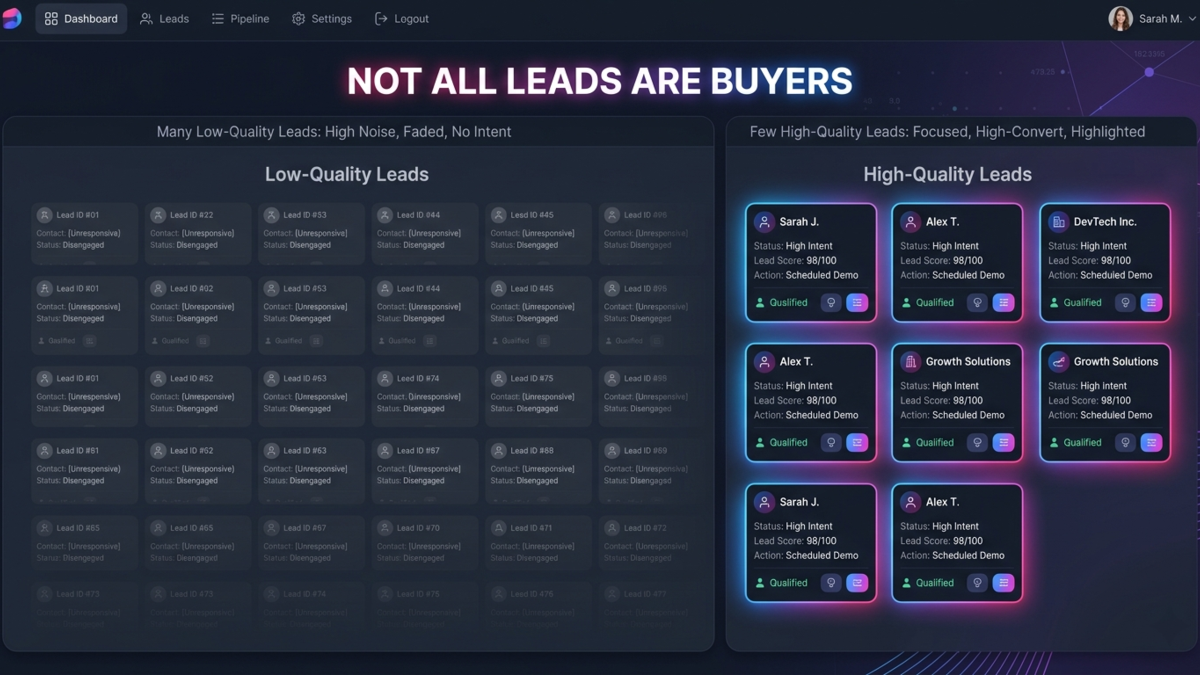
You Don’t Have a Lead Problem, You Have a Fake Lead Problem
If your leads aren’t converting, the problem isn’t closing. It’s that most of them were never real buyers in the first place.
Read more →